
From start to finish, Reitman Blacktop will do the job right, the first time!
Long Island driveways, parking lots and roadways face a challenging climate. You need paving work that will stand up to the elements here on Long Island. “Reitman does it right.”
Reitman Sealcoating, Inc. paves blacktop driveways and parking lots across Nassau and Suffolk counties from our yard in Huntington Station. Bob Reitman has president and founder, started in the trade in 1977 and has 49 years of paving and sealcoating experience, and we have served more than 14,000 Long Island customers. Bob supervises every paving job.
This page explains when a driveway really needs new pavement, how we build one, what to expect afterward, and how to look after it. If you would rather just talk it through, call (631) 549-5455 or request a free written quote.
From Start…


To Finish…


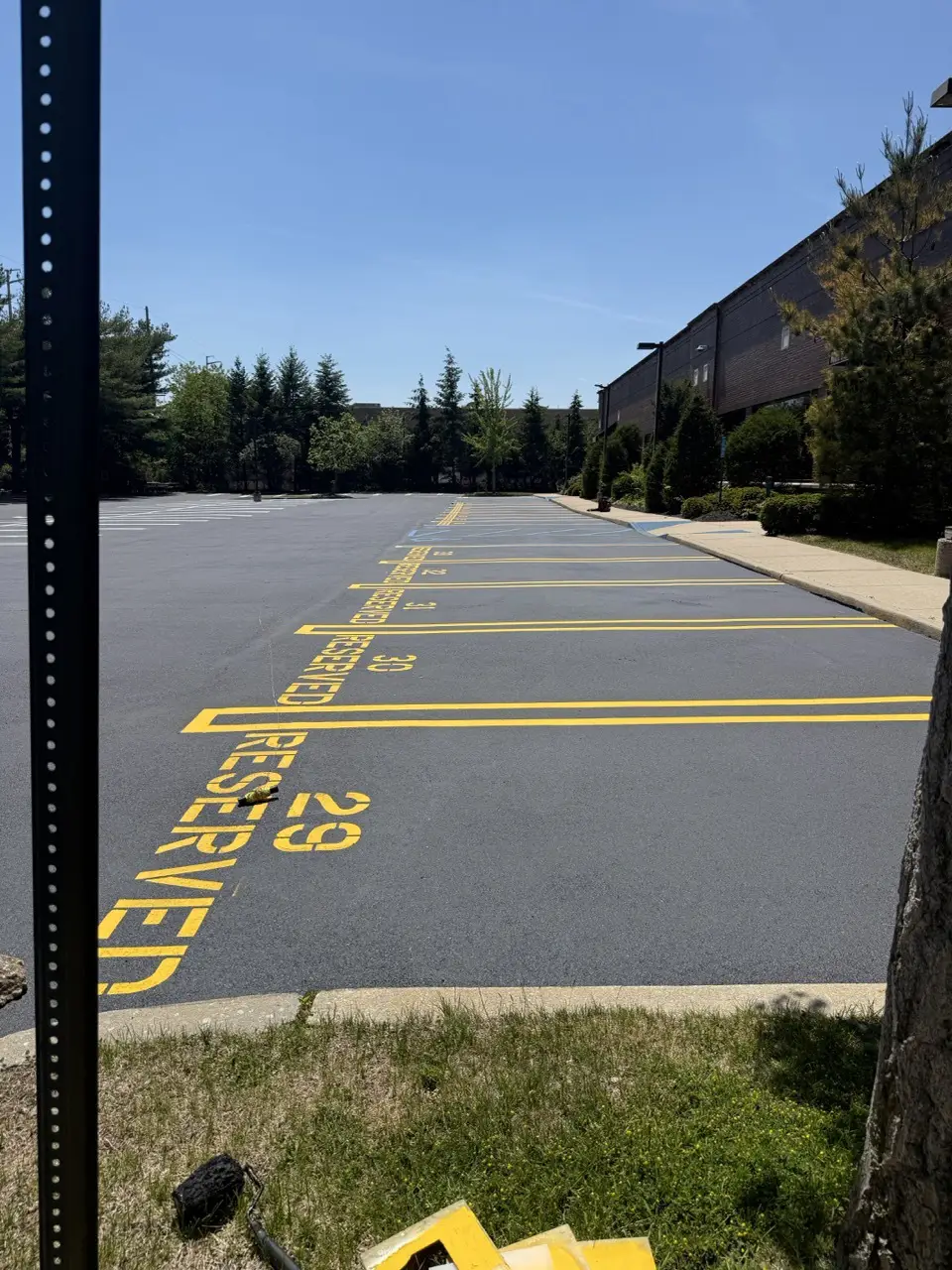
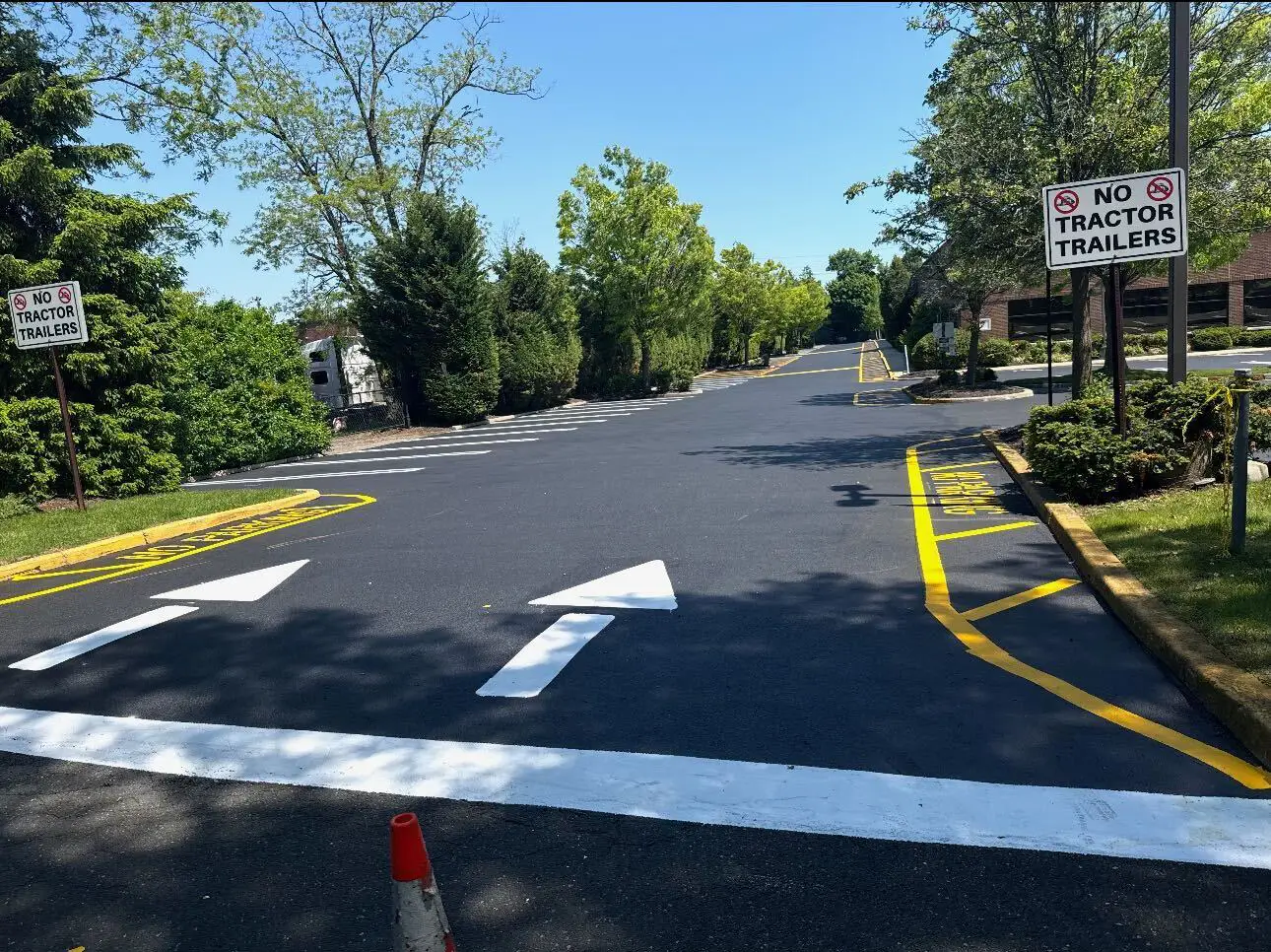


Reitman paving professionals can give your old driveway a whole new look. Have our paving and design specialists consult with you on any project, large or small.
Do You Need a New Driveway, or a Repair?
Cracks and potholes don’t mean that you need a new driveway! A new driveway costs thousands of dollars, and many of the driveways we are called to look at can be restored for far less. Driveway Restoration is the economical, permanent and professional alternative to replacing your old driveway. We will tell you honestly which one you need.
A repair is usually enough when:
- The damage is in a few spots: a pothole, a broken edge, or a sunken area by the garage or apron.
- The cracks are narrow and the pavement around them is still solid.
- The surface is gray and dry but still flat, and it drains properly.
New paving usually makes sense when:
- Cracking covers most of the surface in a connected “alligator skin” pattern. That pattern means the base underneath has failed, and a patch on top of a failed base will not last.
- Water stands in low spots or runs toward the house or garage.
- The driveway has been patched many times and the patches are failing.
- You are widening the driveway, changing its shape, or adding a parking area.
See Driveway Repairs and Hot Patching for how the repair option works.
How We Build a Blacktop Driveway
- Site visit and written quote. We measure the driveway, check how water drains, look at the condition of the base, and give you a free written quote.
- Removal and excavation. Failed pavement is broken up and hauled away. Soft or wet ground underneath is dug out, because new blacktop is only as good as what it sits on.
- Base and grading. We install a recycled concrete aggregate (RCA) base, 4 to 5 inches deep, compact it, and grade it so water runs away from the house and garage and does not pond on the surface.
- Paving. A residential driveway gets 2 inches of NYSDOT Type 7 hot-mix asphalt, laid while it is hot and workable, with the edges formed by hand. Parking lots get 3 1/2 inches of binder course under 1 1/2 inches of Type 7 top course.
- Compaction. The asphalt is rolled while it is still hot. Compaction is what gives blacktop its strength and its smooth finish, so this step is never rushed.
- Finish details. Transitions to the garage, the street and walkways are made flush. If you want a Belgian block apron or border, our masons install it as part of the same job. See Masonry, Belgian Block and Stonework.
A typical residential driveway is a two day job: day one for removing the old driveway and installing the RCA base, day two for paving. Our paving season runs from March through December, and the excavation crew (3 to 4 men) and paving crew (5 to 7 men) work with our own equipment: LeeBoy 8505 and LeeBoy 1000 asphalt pavers, Dynapac 5 ton and 1 ton vibratory rollers, two Case 450 excavators with grader boxes, an Altec asphalt milling machine, Caterpillar 236D skid steer loaders, hot box asphalt trailers and Interstate equipment trailers.
Why Long Island Is Hard on Pavement
Long Island winters rarely stay frozen. Temperatures swing above and below freezing many times a season, and every swing matters. Water gets into small cracks, freezes, expands, and opens the crack wider. When it thaws, more water gets in. Add road salt, plow blades, summer sun that dries out the asphalt, and gas or oil drips, and an unprotected driveway can go from a few hairline cracks to potholes in a couple of winters.
That is why we care so much about base, drainage and compaction on a new driveway, and why we recommend sealcoating it on schedule afterward. Pavement that sheds water lasts.
After Paving: Caring for Your New Driveway
We schedule paving around the weather, because asphalt should not be laid in rain or on frozen ground. Your written quote includes the schedule for your job, and we will tell you exactly when cars can go back on the driveway.
- Keep cars off the new blacktop for 2 to 3 days in summer and 1 to 2 days in spring and fall. It needs longer in hot weather because the asphalt stays soft.
- For the first few months, avoid turning your steering wheel while the car is standing still. New blacktop stays a little soft until it cures.
- Keep kickstands, trailer jacks and ladder feet off the surface, or put a board under them.
- Do not sealcoat right away. New blacktop has to cure first. We recommend the first coat of sealer one year after paving, then every two years after that. See Sealcoating.
Parking Lots and Commercial Paving
We pave and repair parking lots for commercial properties, chains, restaurants and supermarkets across Nassau and Suffolk counties. Commercial work includes paving and resurfacing, hot patch repairs, sealcoating and line striping, which our own crew does with three striping machines. We can schedule around your business hours and work in sections so the lot stays usable.
Commercial clients include KFC, McDonald’s, Sprouts Farmers Market, Uncle Giuseppe’s Marketplace, Best Market, Steel Equities, Mercedes-Benz and Rallye Motors. See our Client List for more.
What Affects the Cost of a Paving Job
Every driveway is different, so we price each job after seeing it. The quote is free and in writing. These are the things that move the price:
- Size and shape. Square footage, plus curves, slopes and tight access that slow the work.
- Condition of the base. A driveway that needs excavation and new base costs more than one where the base is sound.
- Removal. How much old pavement has to be broken up and hauled away.
- Drainage. Regrading so water stops ponding.
- Extras. Widening, aprons, Belgian block borders and walkways.
Click here to learn more about Driveway Restoration and to receive $100.00 OFF ANY PAVING JOB
Blacktop Paving Questions
Do cracks and potholes mean I need a new driveway?
Usually not. If the damage is in a few spots and the rest of the pavement is solid, hot patching and sealcoating will fix it for a fraction of the cost of repaving. New paving makes sense when cracking covers most of the surface, water ponds, or old patches keep failing.
How long does it take to pave a driveway?
A typical residential driveway takes two days: one day to remove the old driveway and install the RCA base, and one day to pave. Asphalt is not laid in rain or on frozen ground, so your written quote includes the schedule for your job.
How thick is a new blacktop driveway?
We install 4 to 5 inches of compacted recycled concrete aggregate base and 2 inches of NYSDOT Type 7 hot-mix asphalt. Parking lots get 3 1/2 inches of binder course and 1 1/2 inches of Type 7 top course.
How soon can I drive on my new driveway?
Keep cars off for 2 to 3 days in summer and 1 to 2 days in spring and fall. For the first few months, avoid turning the wheels while the car is standing still.
What months do you pave?
We pave from March through December. Hot patch repairs are done year round.
When should a new driveway be sealcoated?
Not right away. New blacktop has to cure first. We recommend the first coat one year after paving, then every two years after that.
Do you pave parking lots as well as driveways?
Yes. We pave, repair, sealcoat and stripe parking lots across Nassau and Suffolk counties. Striping is done by our own crew, and we can work in sections so the lot stays open.
Are you licensed and insured?
Yes. Reitman Sealcoating, Inc. is licensed by Nassau County (Consumer Affairs license H2303850000) and Suffolk County (license H-4992717), insured through Merchants Insurance, and BBB A+ rated. Bob Reitman supervises every job.
Content reviewed by Bob Reitman, Reitman Sealcoating, Inc. Last updated September 2026.
